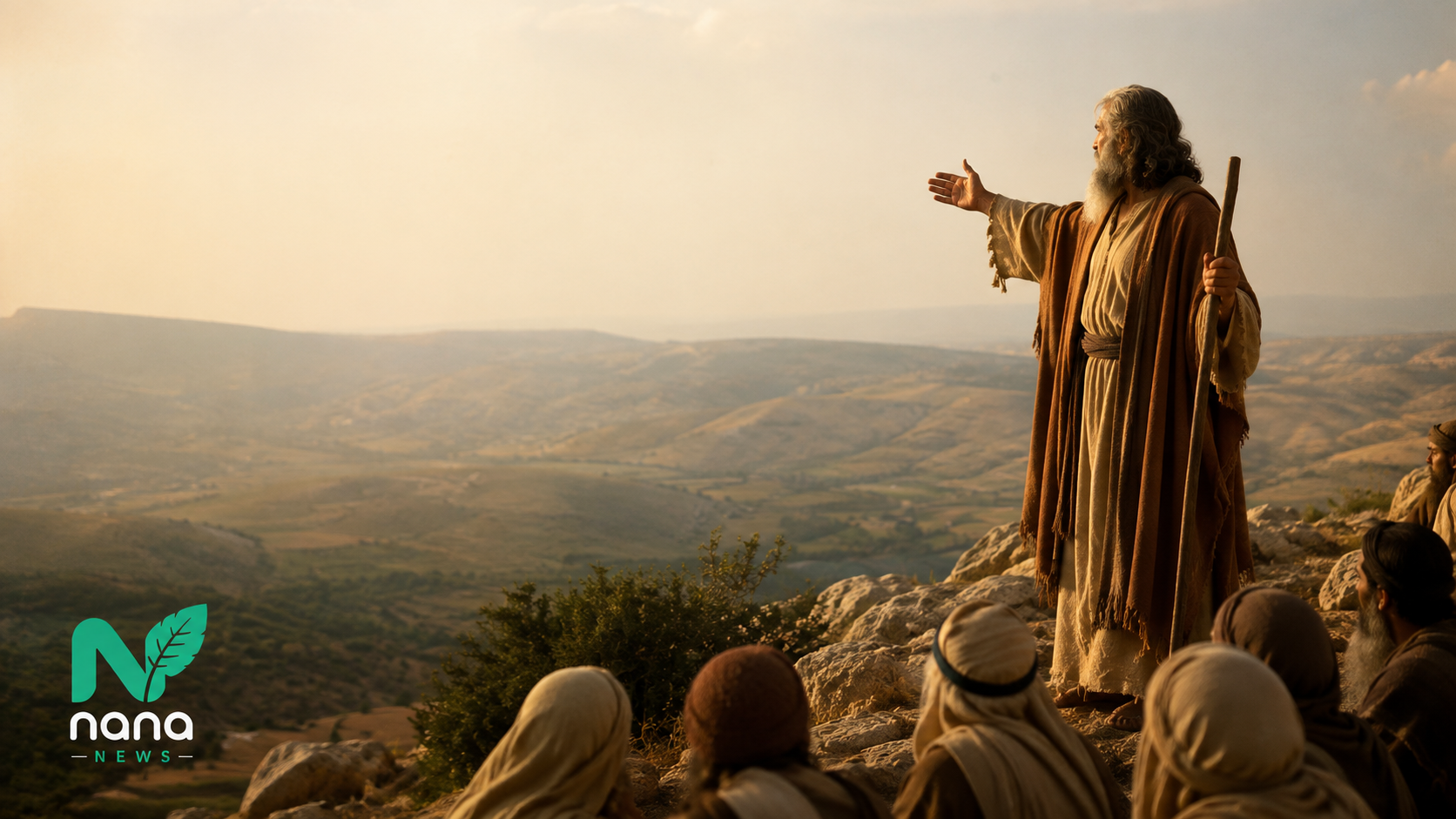
There are some words in the Torah that seem almost too simple to notice.
This week’s parashah begins with one of them.
Re’eh.
See.
Not listen.
Not understand.
Not even believe.
Simply: see.
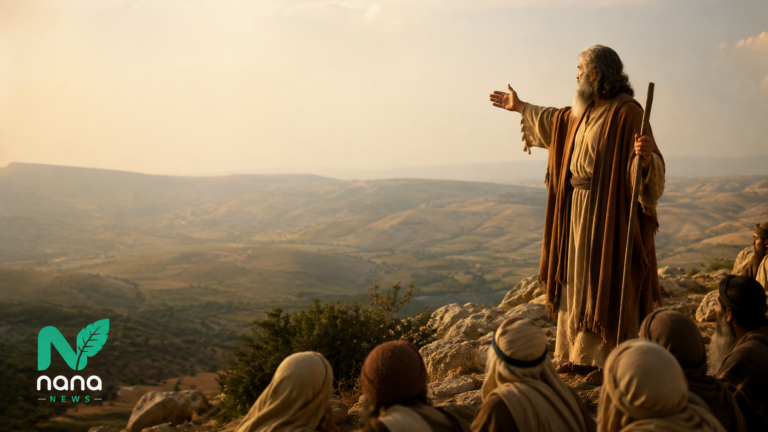
It is an unusual way to begin what is, in many ways, one of Moshe Rabbeinu’s final addresses to the Jewish people. After forty years of wandering through the wilderness, with the Land of Israel finally within reach, you might expect a stirring speech about courage or faith.
Instead, Moshe begins with eyesight.
Why?
“See, I place before you today a blessing and a curse.”
Deuteronomy 11:26
Perhaps the greatest challenge in life is not hearing Hashem. It is recognising Him.
We often imagine that faith depends on witnessing extraordinary miracles: the splitting of the sea, manna falling from heaven, fire descending onto Mount Sinai.
But by the time we reach Parashat Re’eh, those miracles belong largely to the previous generation.
The generation standing before Moshe is about to enter a world that will feel remarkably ordinary. They will plant vineyards, build homes, argue with neighbours, worry about harvests, raise children and grow old.
In other words, they will begin living the sort of lives that most of us live.
And it is to them that Moshe says: See.
Finding Hashem in Ordinary Life
Learn to recognise Hashem not only in the miraculous, but in the everyday.
I have often wondered whether that is actually harder.
It is easy to feel inspired while standing at the Kotel on a cool Jerusalem evening, surrounded by thousands of people singing Lecha Dodi.
It is much harder to find holiness:
- while sitting in traffic on Route 4;
- while waiting in line at the supermarket on Friday afternoon;
- or while answering the same question for the tenth time.
Yet Judaism has always insisted that holiness is found precisely there.
The Baal Shem Tov taught that nothing a person encounters is accidental. Every conversation, interruption and challenge may contain an opportunity to serve Hashem.
Not somewhere else.
Not at some more convenient time.
Right here. Right now.
Perhaps that is why the Torah does not begin by saying, “Choose.”
It begins by saying, “See.” Because before we can choose blessing, we first have to recognise where blessing already exists.
The Difference Between Looking and Seeing
The Hebrew language is wonderfully economical. The word Re’eh contains an invitation that English struggles to capture.
It is not merely asking us to look with our eyes. It is asking us to:
- perceive;
- notice;
- and pay attention.
One of the recurring teachings of the Lubavitcher Rebbe is that every Jew has the power to reveal light in places that appear ordinary.
Not by waiting for extraordinary moments, but by transforming ordinary ones:
- lighting Shabbat candles;
- greeting someone warmly;
- giving quietly to someone in need;
- or pausing to thank Hashem before rushing into the next task.
These actions rarely attract attention. Yet they quietly change the spiritual atmosphere of a home—and perhaps even of an entire community.
One Parashah, Many Parts
Parashat Re’eh contains more than fifty mitzvot. On the surface, many of them seem unrelated.
Beneath them all runs one common thread.
Judaism refuses to divide life into “religious moments” and “ordinary moments.”
How we eat matters.
How we lend money matters.
How we celebrate matters.
How we speak matters.
How we care for the vulnerable matters.
Holiness is not reserved for the synagogue. It belongs in the kitchen, the marketplace, the workplace and around the Shabbat table.
Keep Walking
Rabbi Nachman of Breslov famously taught that the whole world is a very narrow bridge, and the essential thing is not to be afraid.
We often read those words as encouragement during difficult times. Perhaps they are also an invitation to keep moving—to keep choosing, and to keep noticing, even when blessing is not immediately obvious.
Faith does not always mean knowing where the road leads. Sometimes it means taking the next honest step while trusting that the path itself has meaning.
Around the Shabbat Table
This week, instead of asking only what happened in the parashah, try one of these questions:
- What blessing in your life has become so familiar that you have stopped noticing it?
- Why do you think Moshe says “See” rather than “Listen”?
- Is it easier to recognise Hashem in extraordinary events or in ordinary life?
Shabbat Times
Nahariya
| Torah Portion | Re’eh |
| Friday | August 7, 2026 |
| Candle Lighting | 7:03 PM |
| Saturday | August 8, 2026 |
| Shabbat Ends | 8:12 PM |
As the sun sets over the Mediterranean this Friday evening, the opening word of this week’s parashah offers a gentle challenge.
Before rushing into another week…
Before thinking about what we still lack…
Take a moment simply to see.
The people who love you.
The home you have built.
The privilege of another Shabbat.
The gift of living in the Land of Israel.
Sometimes blessing is not something we need to search for.
Sometimes it has been quietly waiting for us to notice it all along.
Shabbat Shalom from all of us at NANA News.